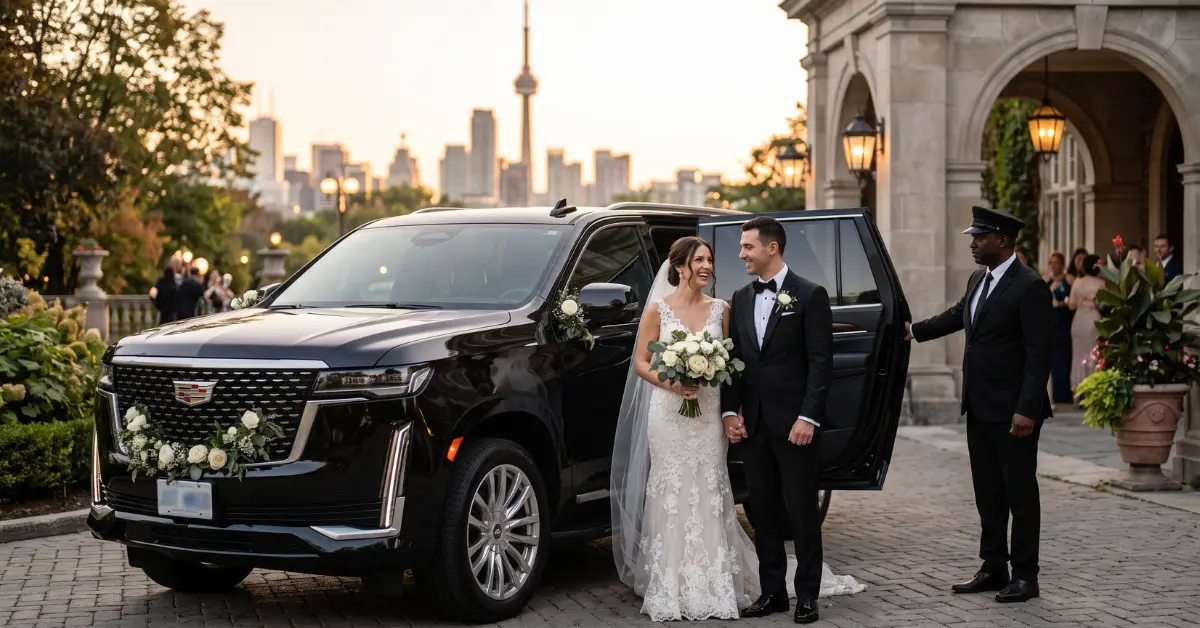
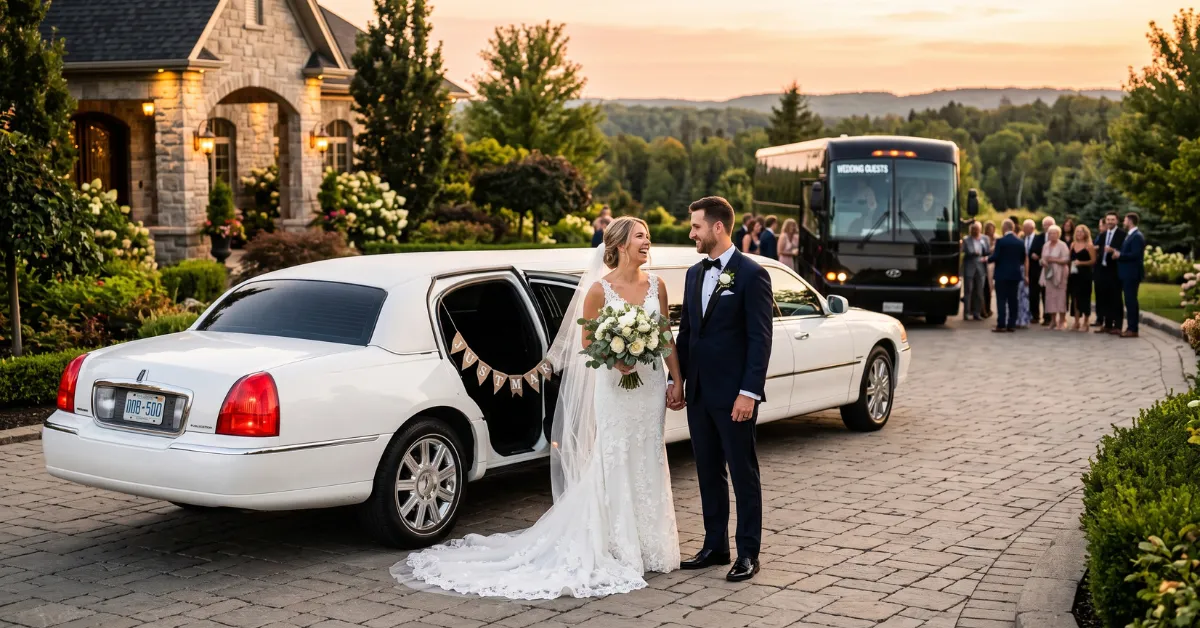
The most common wedding transportation mistakes are booking vehicles too late, choosing vehicles based only on appearance, forgetting guest transportation, underestimating travel times, and failing to confirm details in writing. Couples can avoid these issues by planning transportation several months in advance, building time buffers into the schedule, and assigning one coordinator to manage logistics.
An ideal arrangement of wedding transport matches vehicles with passenger needs, builds in realistic buffers for time delays and confirmations on everything, and designates one person to drive transportation management through the day.
Why Wedding Transportation Matters
Wedding transportation ties together the hotel, ceremony site, reception venue, and photo locations for you — not to mention your final send-off! The whole wedding timing is dependent on the travel of each segment without delay.
Good planning helps couples:
- Keep the wedding timeline organized
- Move guests safely between locations
- Reduce waiting time
- Avoid last-minute confusion
- Give the couple more time to enjoy the day
1. Booking Transportation Too Late
Waiting until the final weeks is one of the most avoidable wedding transportation mistakes. Popular wedding dates can have limited availability.
Look after confirming the wedding date and primary sites. For some peak-season weddings, planning six to nine months may give you greater vehicle options. Prior booking may be needed for specialty vehicles and large guest shuttles.
2. Choosing a Vehicle Only for Its Appearance
A beautiful limousine may look perfect in wedding photos but still be unsuitable for the actual trip. Passenger capacity and comfort should come first.
Consider:
- Number of passengers
- Actual seating capacity
- Wedding dress space
- Luggage and personal items
- Accessibility requirements
- Number of trips
- Route distance
- Vehicle access at the venue
Always ask the provider about practical passenger capacity before booking.
3. Forgetting Guest Transportation
Couples may book transportation for themselves and the bridal party but forget about their guests.
Guest Shuttle: If your hotels and venue are far apart, or if parking is limited at both locations — particularly useful if many of your guests do not know the area.
| Detail | What to Confirm |
| Pickup | Exact hotel or meeting point |
| Destination | Ceremony or reception venue |
| Guests | Expected number using transportation |
| Vehicle | Capacity and accessibility |
| Departure | Boarding and travel time |
| Return | Number of trips required |
| Contact | Person managing transportation |
4. Underestimating Travel Time
A navigation app may show a 20-minute journey. Wedding transportation usually requires more time than the driving estimate.
Allow time for:
- Guest boarding
- Loading personal items
- Parking
- Venue access
- Traffic
- Unloading
- Unexpected delays
For example, a 25-minute drive may need a longer transportation window after boarding and a traffic buffer are added. The correct buffer depends on the route and local conditions.
5. Creating a Schedule That Is Too Tight
Wedding schedules can change during the day. Photography may take longer. Guests may board slowly. The ceremony may finish later than planned.
Work backward from important fixed times:
Required arrival → travel time → boarding time → traffic buffer → pickup time
This method creates a more realistic transportation timeline and reduces the risk of one small delay affecting the rest of the wedding.
6. Failing to Confirm Details in Writing
Verbal agreements can create confusion. Every important transportation detail should appear in the contract or written confirmation.
Confirm:
- Wedding date
- Vehicle type
- Number of vehicles
- Pickup addresses
- Drop-off addresses
- Service hours
- Pickup times
- Overtime rates
- Waiting charges
- Cancellation terms
- Additional fees
- Backup arrangements
The Limo Travel Guide approach is simple: clear written details are easier to verify than verbal promises.
7. Ignoring Venue Access and Pickup Points
A venue name alone may not give the driver enough information. Hotels can have several entrances. Large vehicles may need specific loading areas.
Confirm:
- Exact pickup entrance
- Loading zone
- Parking instructions
- Access roads
- Gates or restrictions
- Directions for large vehicles
8. Forgetting Accessibility Requirements
You should talk about what types of accessibility needs you each have before deciding on a vehicle. However, not every limousine, shuttle, or coach can allow for all mobility needs.
Ask about:
- Wheelchair access
- Ramps or lifts
- Step height
- Accessible seating
- Mobility equipment storage
- Boarding assistance
For additional guidance, review the Canadian Transportation Agency accessibility planning guidelines.
9. Forgetting the End-of-Night Transportation Plan
Planning includes more than just getting guests to the reception. Couples must also plan how the guests will get back to their hotels or somewhere else.
The plan should answer:
- When does the first shuttle leave?
- Where do guests board?
- When does the final shuttle leave?
- Are multiple trips required?
- Who communicates departure times?
Include return transportation in the master wedding timeline.
10. Making the Couple Manage Transportation
The couple should not spend the wedding day answering driver calls or directing guests.
Assign one transportation coordinator such as:
- Wedding planner
- Wedding coordinator
- Trusted family member
- Best man
- Maid of honor
11. Choosing the Cheapest Quote Without Comparing Service
Not always the cheapest price offered provide good value. Choose only the end service after comparison.
| Factor | What to Check |
| Vehicle | Condition, comfort, and capacity |
| Driver | Experience and professionalism |
| Insurance | Appropriate commercial coverage |
| Licensing | Required local credentials |
| Pricing | Hourly, package, or trip rates |
| Extra fees | Overtime, waiting, tolls |
| Backup | Contingency arrangements |
| Itinerary | Written schedule confirmation |
This will depend on the specific location, as licensing and insurance requirements differ. Check with the provider as to what rules are applicable in your region.
12. Failing to Have a Backup Plan
Unexpected problems can happen even with careful planning. A vehicle may develop a mechanical issue. Traffic may become unusually heavy. A road may close.
Ask the provider:
What happens if the assigned vehicle becomes unavailable?
A useful backup plan should include:
- Emergency contact
- Replacement vehicle process
- Alternative transportation option
- Person authorized to make decisions
Discuss this before the wedding rather than during an emergency.
How to Avoid Wedding Transportation Mistakes
Create one master transportation document containing every important detail.
Include:
- Vehicle information
- Passenger groups
- Pickup locations
- Exact addresses
- Destinations
- Pickup times
- Expected arrival times
- Driver contact
- Transportation company contact
- Backup contact
- Return schedule
- Accessibility requirements
According to the Limo Travel Guide, it is better to think of transport as a part of the entire wedding timeline too – not just something you do for your tasks.
Send the transportation provider, wedding planner, venue, and set coordinator a final schedule.
Wedding Transportation Cost Factors
The total cost of wedding transportation may depend on:
- Vehicle type
- Hours booked
- Travel distance
- Number of vehicles
- Guest shuttle requirements
- Peak-season demand
- Additional stops
Wedding Transportation Planning Timeline
| Time Before Wedding | Transportation Task |
| 9–12 months | Research providers and specialty vehicles |
| 6–9 months | Reserve transportation |
| 2–4 months | Review guest transportation needs |
| 4–6 weeks | Confirm routes and major details |
| 1–2 weeks | Finalize itinerary and guest instructions |
| Several days | Recheck vehicles, addresses, drivers, and return trips |
Expert Checklist Before the Wedding
Use this checklist several days before the event:
- Confirm every vehicle.
- Confirm passenger capacity.
- Recheck pickup addresses.
- Confirm venue entrances.
- Review passenger numbers.
- Confirm accessibility needs.
- Review the complete itinerary.
- Check travel buffers.
- Confirm return transportation.
- Review the backup plan.
- Give guests pickup instructions.
- Confirm driver contact details.
- Assign one transportation coordinator.
A final review can catch small problems before they become wedding-day delays.
Conclusion
Common mistakes with wedding transport are easily preventable through early planning and the correct communication. Book vehicles early. Design capacity to match actual need.
Add realistic travel time. Plan guest and return transportation. Confirm every detail in writing. One person handles the transport. It helps couples not pause for a minute and do their marriage with confidence.
Frequently Asked Questions
Can a wedding limousine fit a large wedding dress?
Large gowns often require extra space. Couples should confirm passenger capacity and interior room before booking.
Is a wedding shuttle worth it?
A wedding shuttle can improve guest convenience and reduce parking and transportation issues, especially when multiple venues are involved.
How many vehicles are needed for a wedding?
The number depends on guest count, venue locations, bridal party size, and whether guest transportation is provided.
What happens if a wedding limo is late?
A professional transportation provider should have contingency procedures, backup vehicles, and communication protocols in place.
When should couples book wedding transportation?
Book several months ahead. Six to nine months is a useful target for many peak-season weddings.
What is the biggest wedding transportation mistake?
Poor planning is the biggest problem. Booking late, using unrealistic travel times, and unclear communication often create avoidable delays.